New Life Fellowship of Churches
About Us
A Family of Churches
United by A Common Heritage and Vision Since 1986
New Life Fellowship of Churches (NLFOC) is a family of churches whose relationships stem from the common origins of the missionary church planting efforts of Eric and Jenny Dooley as well as Gerrit and Julie Hansen, which started in Jakarta, Indonesia in 1986.
Currently NLFOC churches are in Cambodia, Indonesia, Japan, Malaysia, Myanmar, Singapore, Taiwan and Vietnam. NLFOC churches are autonomous non-denominational in affiliation and evangelical-charismatic in expression. We share a common history, heritage and vision, and partner together for world evangelism and church planting.

Unity in Christ
The Guiding Values and Covenant Commitment of NLFOC Churches
NLFOC churches are autonomous and sovereign under Christ, self-governing, self-supporting and self-propagating. Nevertheless, sharing a common history and heritage, there is the recognition of solidarity and unity with one another as each church is sovereignly placed together within NLFOC as a family of churches.
The uniting familial-relational nature of the relationships among NLFOC churches is expressed in mutual love and covenantal commitment among the NLFOC churches, so ensuring that the churches are not isolated from the richness and blessings of ecclesial fellowship. This uniting priority, beyond a mere coexistence, is specifically demonstrated through the voluntary, willing and active pursuit of the leadership of NLFOC Churches to embrace one another in covenantal communion and genuine love.
The sections below express the values and practical points of unity of NLFOC churches, which offers a biblically-centered identity for NLFOC churches across nations, generations and cultures. While they provide direction, focus and enrichment, these points are best treated as guidelines for the appropriate and specific articulations that would be contextually relevant for each church. It is the leadership within each church who will be responsible for the appropriate outworking of these points for their individual churches.
The Vision of NLFOC Churches
Together Advancing God’s Kingdom
Our vision is to be a family of churches united in love and committed to mutual support so that together we fulfill God’s mission in Asia and beyond for his eternal glory.
Family: Our Spiritual Bond Across Churches
This highlights the uniqueness of our spiritual relationship as a family that stems from our common heritage and history. It is this special relationship that is the basis of our fellowship as churches.
United in Love: The Core of Our Fellowship
This means that it is mutual love that binds us in unity, not signing in to be part of a “denomination.” It also prioritizes the significance of love that defines out relationships. It is also agreement with God’s priority for “love” and that “love never ends.” Our fellowship is not primarily working relationship, it is defined by Christ’s love for us and our love for one another.
Committed to Mutual Support: Strengthening Each Other in Christ
We recognise that we need each other. We are not alone and we look after one another. God has given us to each other to support and help one another.
Together: Collaboration for a Greater Mission
We want to galvanise NLFOC churches to become more collaborative and inclusive in what we do. It is also hoped that we have the mindset of thinking of one another in what we do. The work is bigger than just what one individual church can do and we want to synergize.
Fulfilling God's Mission: Our Call to Church Planting and Beyond
A large part of this is fulfilling the Great Commission, church planting, etc. But it is broader than that which emphasizes God’s mission, not ours, but yet allows each church to express what it is individually/specifically/uniquely called to do missionally as part of its interpretation of “God’s mission” for itself.
In Asia and Beyond: Expanding Our Reach for God’s Kingdom
This spells out our main geographical area of interest but we do not limit ourselves to only Asia.
For His Eternal Glory: Our Vision with Eternal Significance
Our purpose in working out our vision is for God’s Kingdom glory. It also means that our vision has eternal value, it is worth investing our lives into.
Participating in God’s Mission
Propagating Churches with a Shared Vision and Values
Our mission is understood as aligned to God’s mission, and that he called us to participate with him in accomplishing his mission. God also created us uniquely and specifically for a participatory role in his overall mission for the world and humanity.
Genesis 1:12 describes the principle of reproduction after our own kind, applied here to the propagation of churches after our own kind. It is to be expected that NLFOC churches will propagate like churches, reflecting the same values and vision. Rather than suggesting exclusivity, this principle is merely the acknowledgement that NLFOC churches are called to a specific mission in God’s Kingdom. Having a clear mission enables us to focus and effectively do our part in God’s overall plan for His world.
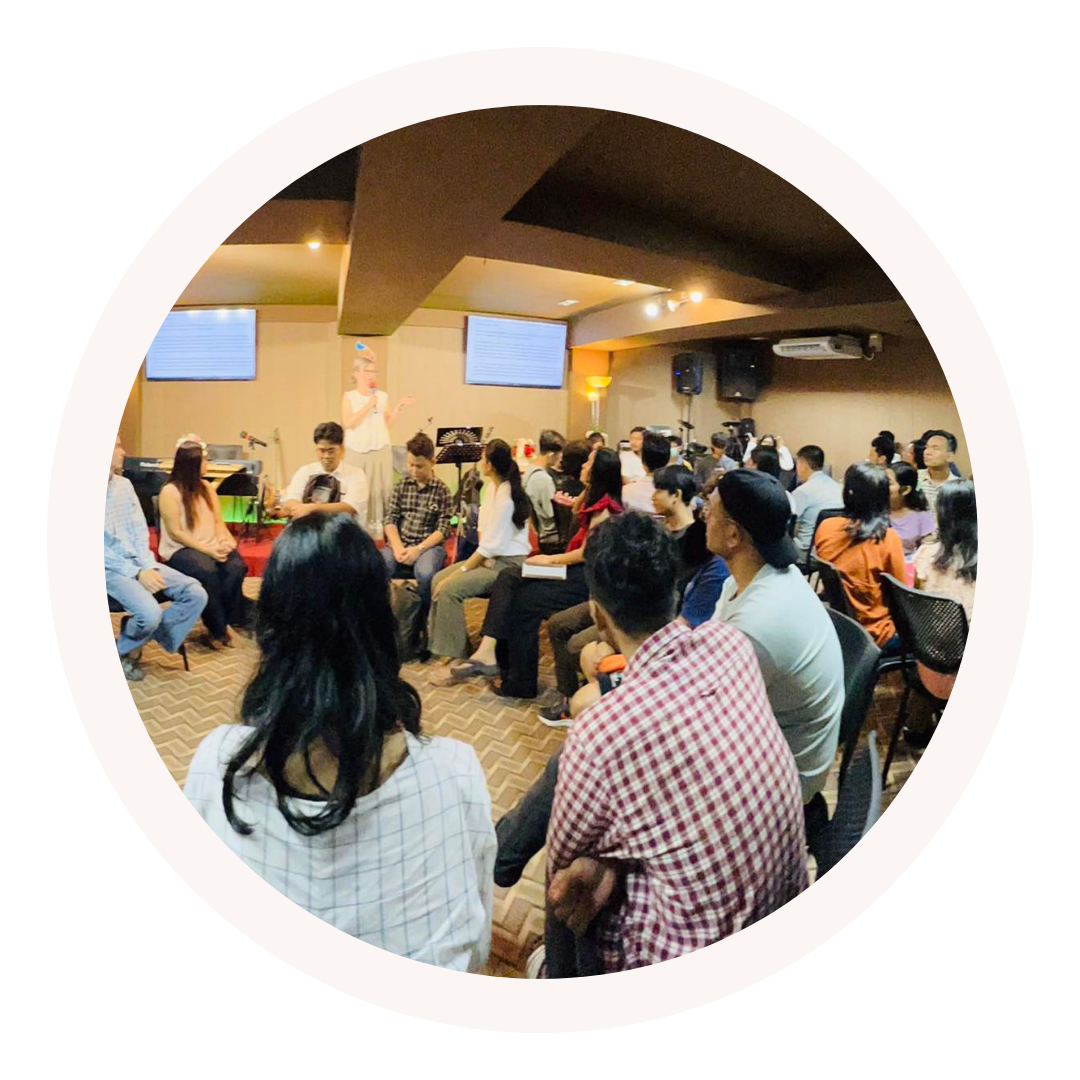
Motivated by our love for God and people, the mission of NLFOC churches are:
- Reaching and Winning Our Generation with the Gospel (Luke 19:10; 2 Cor. 5:20)
- Equipping God’s People for Ministry (Eph. 4:11-12)
- Building Mature Disciples, Christ-Centered Families, and His Glorious Church (Col. 1:28; Eph. 5:22-28)
- Sending Evangelistic Teams to Preach the Gospel and Make Disciples (Luke 10:1-2; Acts 8:4-6)
- Planting Churches with a Shared Pattern (Matt. 28:19-20; Acts 14:21-23)
The Core Values of NLFOC Churches
Uniting Generations Through Shared Values
Values are things we treasure, esteem, and hold as important. “Core” refers to that which is at the center, that which is integral, and life giving. “Shared” speaks of a sameness based on relationship, co-ownership, and joint possession.
Core values, by definition, must be a conviction of the heart, and not externally imposed. The importance of these values dictates and necessitates that they are intentionally and faithfully passed on from generation to generation.
Jesus is Lord: The Foundation of Our Church and Lives
Jesus’ lordship must be recognized and established as the foundation of the church as a congregation and in each person who is subsequently added to the church. Jesus’ Lordship is not just personal but also extends to his rulership over all things in heaven and on earth. God’s ultimate purpose is “to bring unity to all things in heaven and on earth under Christ,” consistent with Jesus’ prayer, “Your kingdom come, your will be done on earth as it is in heaven”
Building on Solid Ground: Reproducing Foundational Teachings
Teaching and regularly reiterating foundational material, and committing the same to leaders to reproduce: repentance, water baptism, being filled with the Holy Spirit, being added to the church, faith, grace, righteousness, the Great Commission.
Making Mature Disciples: Beyond Congregation Gathering
Active Participation: Being the Church, Not Just Attending
Tithing and Generosity: Supporting Missionary Giving
The Power of Prayer and Fasting: Rooted in God's Word
Vibrant Praise and Worship: Intimacy and Reverence
Living in Holiness and Purity: Personal Devotion
Strengthening Biblical Marriages and Raising Godly Children
Pastoral Ministry: Caring for God's Flock
World Evangelism and Church Planting: Spreading the Gospel
Lifelong Learning: Growing in Knowledge for Ministry and Personal Growth
Meet Our Pastors




What We Believe
The Apostles' Creed
I believe in God, the Father almighty,
creator of heaven and earth.
I believe in Jesus Christ, his only Son, our Lord,
who was conceived by the Holy Spirit,
born of the Virgin Mary,
suffered under Pontius Pilate,
was crucified, died, and was buried;
he descended to the dead.
On the third day he rose again;
he ascended into heaven,
he is seated at the right hand of the Father,
and he will come to judge the living and the dead.
I believe in the Holy Spirit,
the holy catholic Church,
the communion of saints,
the forgiveness of sins,
the resurrection of the body,
and the life everlasting.
Amen.
Uniting in Faith
Since the Apostles’ Creed describes uniting points of belief for Christians but is not an exhaustive statement of beliefs, the following is an example of a Statement of Faith reflecting Charismatic/Pentecostal beliefs, which is derived and expanded from the Apostles’ Creed.
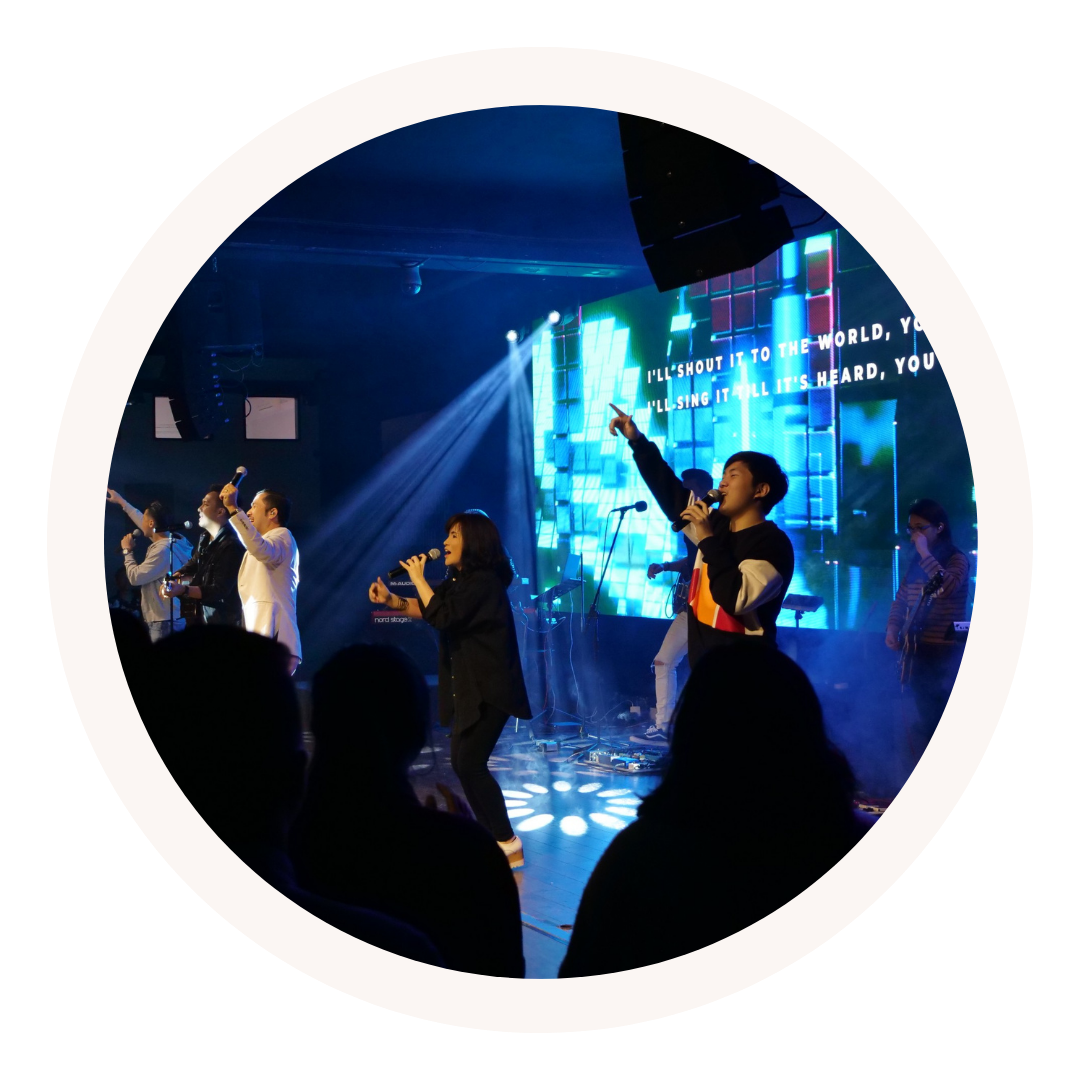
What We Believe
1. The Scriptures, both Old and New Testaments, to be the inspired Word of God, without error in the original writings, the complete revelation of His will for the salvation of men, and the Divine and final authority for all Christian faith and life.
2. In one God, Creator of all things, infinitely perfect and eternally existing in three persons, Father, Son and Holy Spirit.
3. That Jesus Christ is true God and true man, having been conceived of the Holy Spirit and born of the Virgin Mary. He died on the cross a sacrifice for our sins according to the Scriptures. Further, He arose bodily from the dead, ascended into heaven, where at the right hand of the Majesty on High, He now is our High Priest and Advocate.
4. That the ministry of the Holy Spirit is to glorify the Lord Christ, and during this age to convict men, regenerate the believing sinner, indwell, guide instruct, and empower the believer for godly living and service.
5. That man was created in the image of God but fell into sin and is therefore lost and only through repentance from sin and faith toward God, in accordance with the gospel, i.e. regeneration by the Holy Spirit can salvation and spiritual life be obtained.
6. That the shed blood of Jesus Christ and His resurrection provide the only ground for justification and salvation for all who believe, and only such as receive Jesus Christ are born of the Holy Spirit, and thus become children of God.
7. That water baptism and the Lord’s Supper are ordinances to be observed by the Church during the present age. They are, however, not to be regarded as means of salvation.
8. That the baptism of the Holy Spirit is an experience distinct from and subsequent to salvation and is commonly evidenced by speaking in tongues.
9. That the true Church is composed of all such persons who through saving faith in Jesus Christ have been regenerated by the Holy Spirit and are united together in the body of Christ of which He is the head.
10. That only those who are thus members of the true Church shall be added to the local church.
11. That Jesus Christ is the Lord and Head of the Church, and that every local church has the right under Christ to decide and govern its own affairs.
12. In the personal and imminent coming of our Lord Jesus Christ and that this “Blessed Hope” has a vital bearing on the personal life and service of the believer.
13. In the bodily resurrection of the dead; of the believer to everlasting blessedness and joy with the Lord, of the unbeliever to judgment and everlasting conscious punishment.